
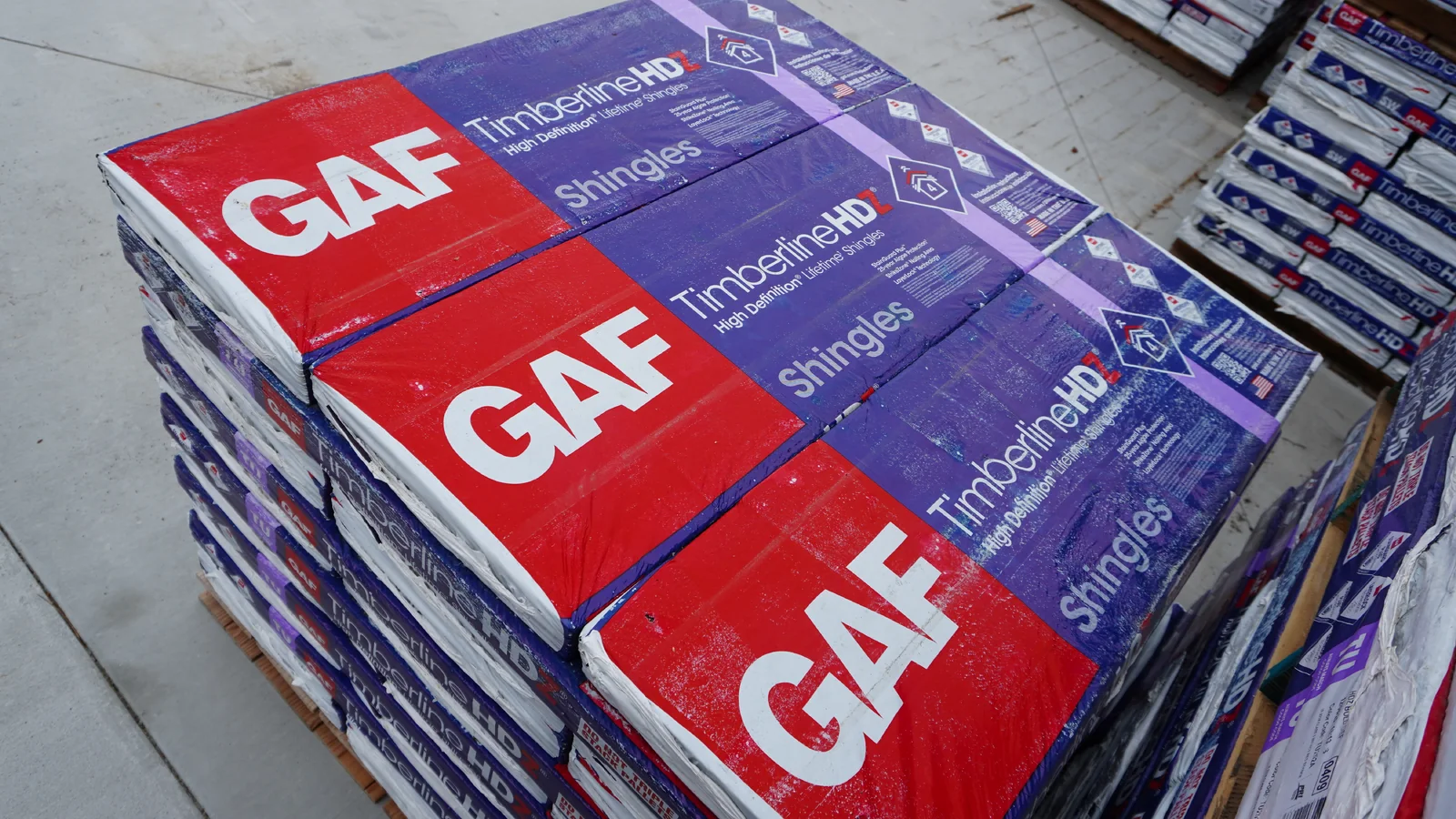

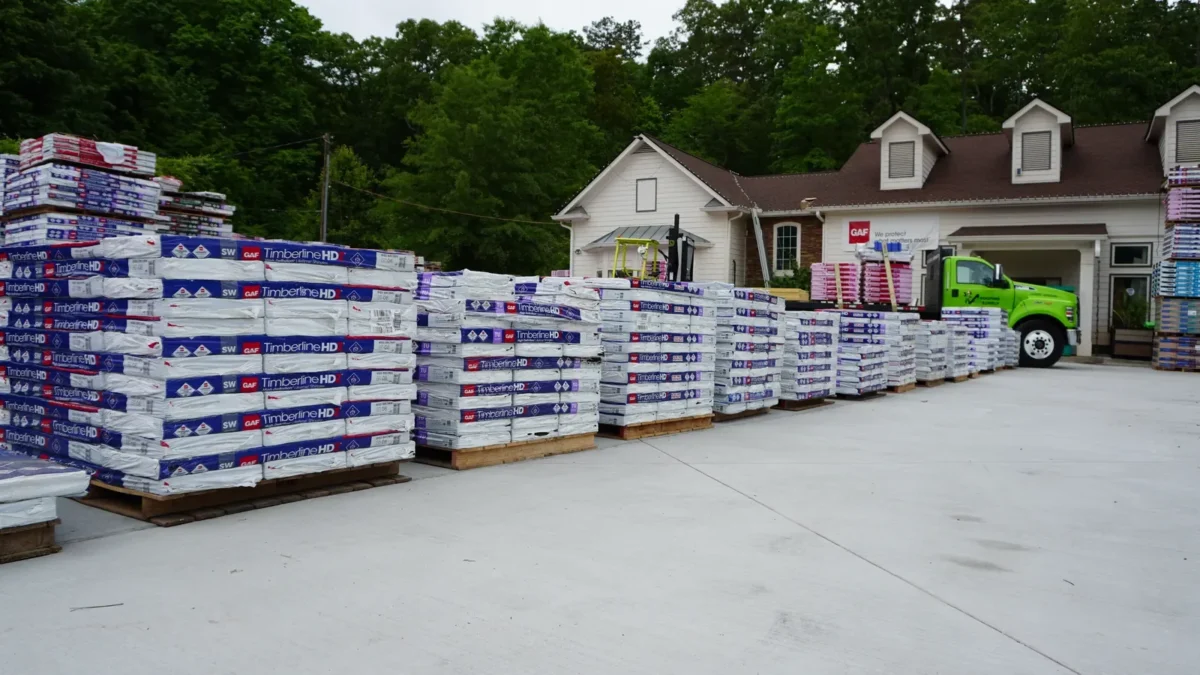
As of September 7, 2026, A+ Roofing Supply lists GAF Timberline HDZ Charcoal at $36.66 per bundle—$109.98 for three bundles, the nominal field-shingle quantity for one roofing square. One square is 100 square feet of roof surface. That figure covers the field shingles only, before waste, accessories, tax, delivery and installation.
A useful roofing budget starts with the exact product and measured roof area. Below are dated prices from our online catalog, followed by quantity examples and a checklist for a complete material quote in Sugar Hill and North Georgia.
A+ Roofing Supply price examples: September 7, 2026
Each price below links to the product used in the example. Prices and availability can change; confirm the current order with A+ before scheduling the job.
| Product | Listed price | Ordering unit | Planning note |
|---|---|---|---|
| GAF Timberline HDZ Charcoal | $36.66 | Bundle | Three-bundle nominal square: $109.98, before waste |
| GAF Seal-A-Ridge Charcoal | $60.00 | Bundle | Approximately 25 linear feet at the specified exposure |
| GAF FeltBuster synthetic underlayment | $90.00 | Roll | Nominal 1,000-square-foot roll; allow for laps and installation requirements |
| Aluminum drip edge, Royal Brown | $8.00 | 10-foot piece | Order from measured edge lengths, including required overlaps and cuts |
These products illustrate different units. Field shingles are estimated by roof area, caps by hip and ridge length, and drip edge by edge length. The accessory prices are separate line items, not a complete package. GAF confirms Seal-A-Ridge’s approximate 25-linear-foot bundle coverage; use the wrapper instructions for the material supplied.
What do shingles cost for a 1,000, 1,500 or 2,000 sq. ft. roof?
The following examples use actual roof surface area, the $36.66 bundle price above, a nominal three bundles per square and a 10% field-shingle waste allowance. Bundle counts are rounded up once, at the end.
| Measured roof surface | Roof squares | Bundles with 10% allowance | Field-shingle subtotal only |
|---|---|---|---|
| 1,000 sq. ft. | 10 | 33 | $1,209.78 |
| 1,500 sq. ft. | 15 | 50 | $1,833.00 |
| 2,000 sq. ft. | 20 | 66 | $2,419.56 |
The 1,500-square-foot example calculates to 49.5 bundles, so the order becomes 50. The 2,000-square-foot example uses 60 bundles before waste: 60 × $36.66 = $2,199.60. Adding six bundles brings the illustrated field-shingle subtotal to $2,419.56.
A 10% allowance is an example, not the right percentage for every roof. Valleys, hips, dormers and the installation layout can change waste. Confirm the exact shingle’s installed coverage and the roofer’s takeoff. See our roof measurement and bundle guide before using these numbers in an order.
Why a 2,000 sq. ft. house needs its own measurement
Living area and roof area are different measurements. A two-story house may have less horizontal roof footprint than a single-story house with the same living area. A garage, porch, overhangs and roof pitch change the surface receiving materials.
Provide a roof measurement report or the roofer’s takeoff. If the dimensions already describe the sloped roof surface, do not apply another pitch multiplier. Keep sections using different roofing systems separate so a low-slope porch is not automatically priced with the main shingle roof.
What belongs on a 20-square roofing material list?
A measured 20-square roof gives you the field area, but it does not supply the edge lengths, flashing details or attic ventilation requirements. Use this checklist to complete the order:
- Field shingles: exact brand, product line and color, plus a stated waste allowance.
- Starter: compatible product and measured eave and rake lengths where required by the installation.
- Hip and ridge caps: total hip and ridge length, product compatibility and required exposure.
- Underlayment: specified material and usable coverage after laps and the required application method.
- Leak barrier: areas and lengths identified in the roof details and project requirements.
- Drip edge and flashing: eaves, rakes, valleys, walls, chimneys and transitions, with the correct profiles.
- Penetration materials: pipe boots, collars and other details sized for the existing penetrations.
- Ventilation: intake and exhaust products selected for the attic design.
- Fasteners: product-specific roofing nails and underlayment fasteners, with separate cap or vent requirements.
- Deck repairs: confirmed quantities or an agreed process for pricing damage revealed during tear-off.
Two 20-square roofs can therefore have different material totals. A roof with long hips or several wall intersections does not share the same accessory quantities as a simple gable roof. Our roof layers guide and ventilation guide explain those parts of the order.
Materials-only cost versus an installed roof quote
A supplier’s material subtotal answers what the selected products cost. A contractor’s installed quote may also include removing the old roof, disposal, installation labor, equipment, site protection, permits where applicable, supervision and cleanup. Ask the contractor to identify the included scope.
There is no reliable fixed labor percentage to apply to this price table. Roof access, height, slope, complexity and repair work can change the installation proposal. Compare written bids using the same product names, quantities and accessory scope, and ask how changes will be documented.
For example, a quote that includes new wall flashing and deck repairs has a different scope from one that leaves those items as allowances. Understanding that difference is more useful than comparing the two headline totals alone.
Roof cost FAQs
What is the most expensive part of a roof replacement?
It depends on the project. Review the material, labor, removal and repair portions of the actual proposal. This article’s shingle subtotal does not establish which line will be largest on your contractor’s estimate.
How much does it cost to repair a roof?
Identify the problem first. Replacing an isolated damaged component and repairing deterioration across several roof sections require different materials and labor. Ask for inspection photos, a defined repair scope and the exact replacement products before requesting a supply quote.
Is there a cheapest time of year to buy roofing materials?
No season guarantees the lowest price. Ask about current pricing, available quantities, order lead time and quote validity. Coordinate delivery with the roofer’s schedule so the material can be received and stored as intended.
Does buying a more expensive shingle include a better warranty?
Compare the actual warranty and its installation requirements. Product price alone does not establish coverage or expected roof life. Our shingle lifespan and selection guide explains what to check.
Are tax and delivery included in these examples?
No. The tables show listed product prices and calculated field-shingle subtotals. Confirm applicable tax, delivery charges, unloading arrangements and other order-specific charges on your final quote. Share the job address and access details when discussing material delivery.
Get a material quote for your Georgia roof
Send A+ Roofing Supply the measurement report, selected shingle line and color, accessory list, delivery address and desired date. If the contractor is still finalizing the takeoff, include the quantities already confirmed and identify the open items. Request your roofing material quote to turn these price examples into an order for your project.